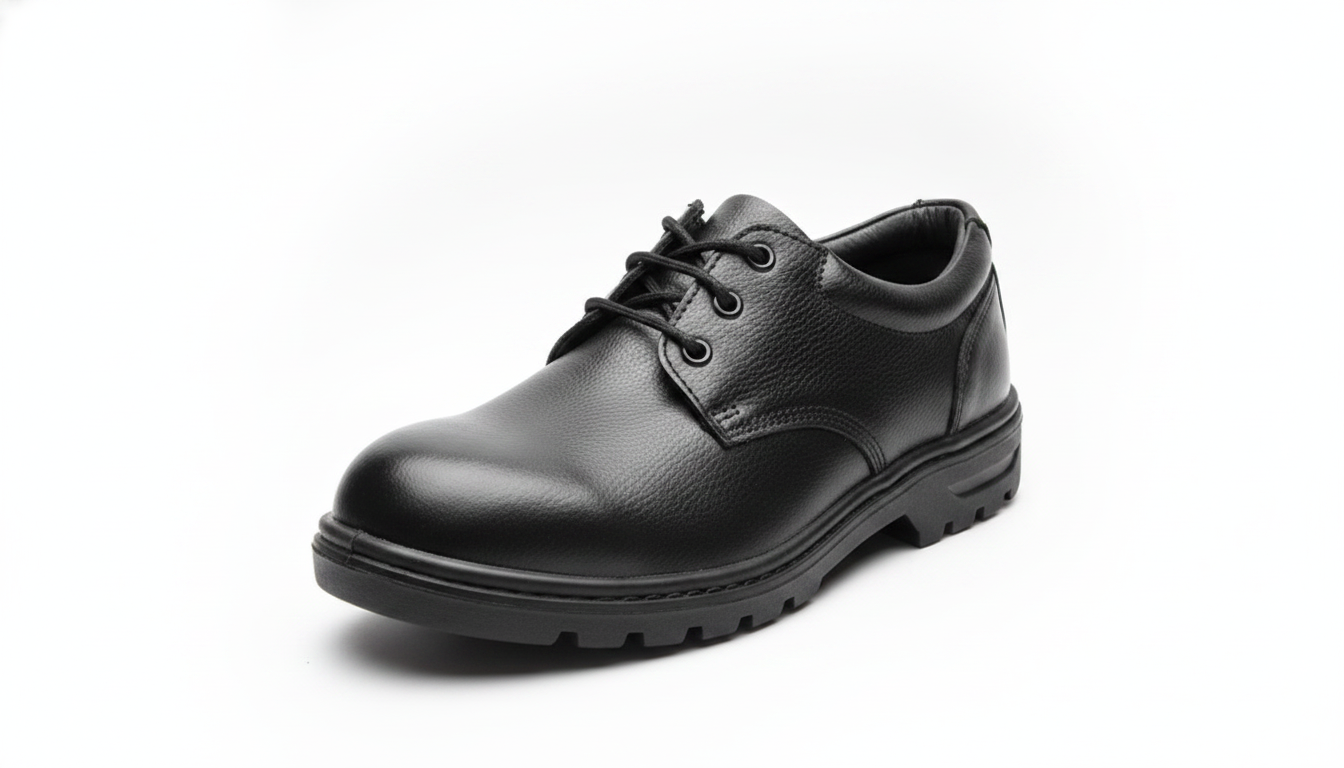
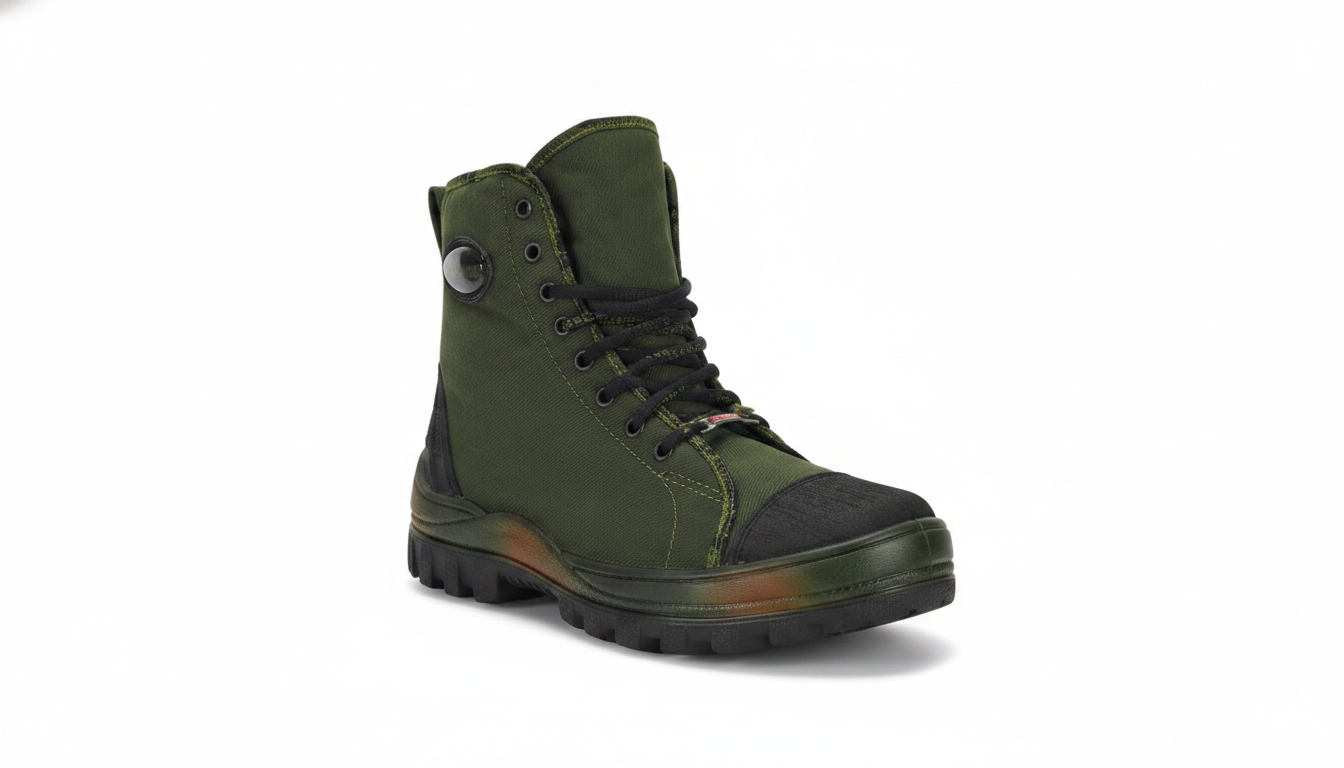
Wet feet aren't just uncomfortable — on a slippery site they're a safety risk, and in monsoon they're a daily reality. Waterproof safety shoes keep water out while keeping the certified protection in. Here's how to choose the right level for your conditions.
Look for the S3 grade
Water resistance in safety footwear is defined by grade. S3 is the one to specify: it builds on S1P (toe cap + puncture-resistant midsole) and adds water penetration and absorption resistance plus a cleated outsole for grip on wet ground. If a shoe is sold as "waterproof," it should be at least S3. Full grade breakdown in the safety shoe standards guide.
Waterproof vs water-resistant vs gumboot
| Need | Best choice |
|---|---|
| Wet floors, rain, muddy sites | S3 safety shoe |
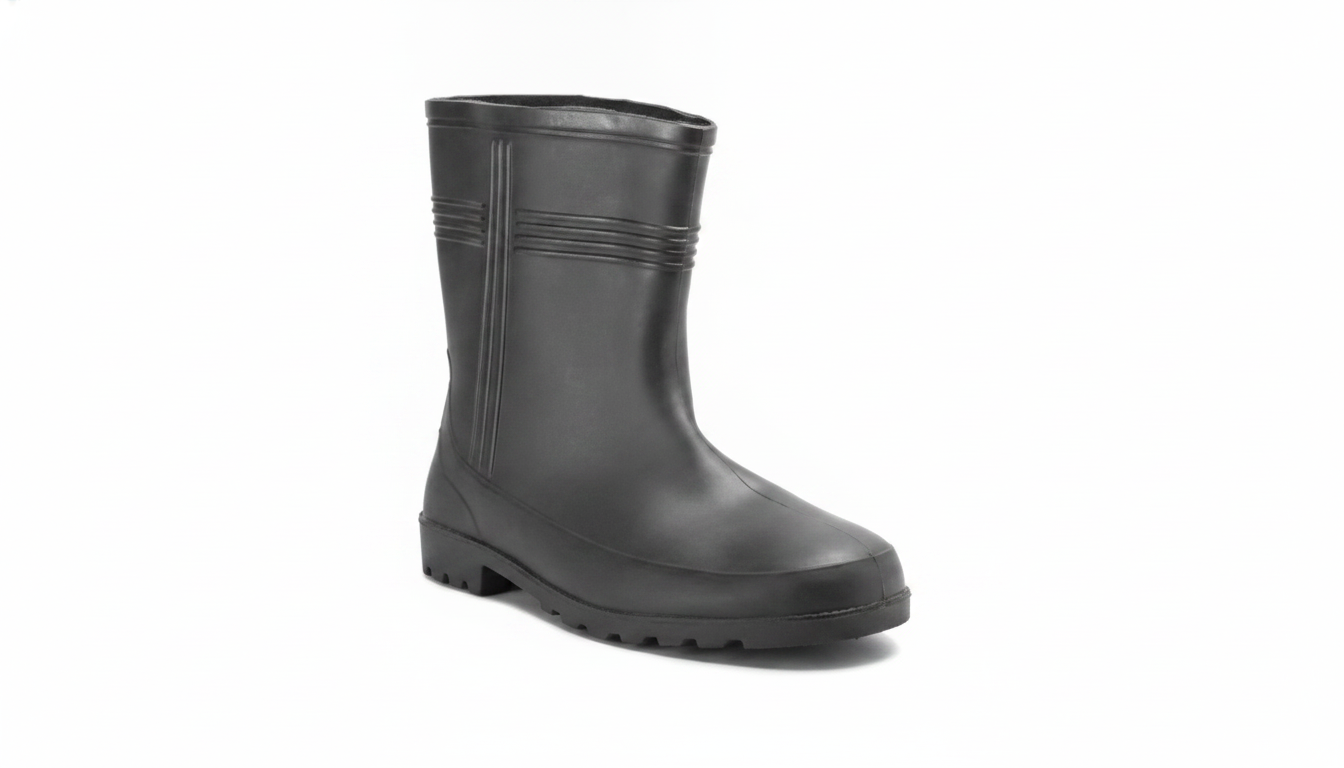
| Standing water, slurry, flooding | Moulded rubber/PVC safety gumboot |
| Dry indoor work | S1 / S1P is enough |
S3 shoes strongly resist typical wet-site water ingress; for genuinely submerged conditions, a moulded safety boot is the right tool.
What makes them work
- Sealed upper — water-resistant leather or sealed synthetic.
- S3 construction — water penetration/absorption resistance.
- Cleated, slip-resistant (SRC) sole — grip on wet, muddy ground. See sole materials.
- Quick-dry lining — comfort after exposure.
Who needs them
Construction and infrastructure, outdoor utilities, agriculture and food processing, and anyone working through the Indian monsoon.
Buy waterproof S3 safety shoes wholesale
DBFootwear manufactures S3 water-resistant safety shoes as an ISO 9001:2015 certified maker in Agra, supplying construction firms, PSUs and distributors factory-direct. Share your quantity and size run for wholesale rates, or see manufacturing and tender supply.